 Dr Mary Aiken is an Adjunct Associate Professor at the Geary Institute for Public Policy, University College Dublin. She is the Academic Advisor (Psychology) to the European Cyber Crime Centre (EC3) at Europol. Mary is a CyberPsychologist and Fellow at the Network Science Research Center (NSRC), lecturer in Criminology and Research Fellow at the School of Law Middlesex University. She is a Fellow of the Society for Chartered IT Professionals. In November 2015, Mary was appointed to the board of the Hague Justice Portal – an organisation focused on social policy issues. Mary's research centres on cyber behavioural analysis. She is currently leading an international research project examining youth behavioural escalation online in conjunction with INTERPOL and a number of international police forces. She is involved in a number of Forensic CyberPsychology research areas including; organised cyber crime, cyber reporting of crime, virtual behavioural profiling, cyber analytics, human trafficking & technology, cyberstalking, cyber resilience, cyberbullying, cyber ethics, child welfare in cyberspace, personal cyber security and safety.
 Adina Braha-Honciuc leads Microsoft’s Accessibility, Sustainability and Environment Policy for Europe, Middle East and Africa. Prior to this, she has been working on policy issues relating to cloud computing and the digital economy, primarily privacy and data protection, and represented Microsoft on privacy matters in various trade associations. She also has experience in the field of corporate strategy within Procter & Gamble in Geneva and Beiersdorf in Hamburg. Adina holds an economics degree from Bucharest Academy of Economic Studies and a Master’s degree in International Business from BI Norwegian Business School in Oslo.
 Margaret (Maggie) Brennan is lecturer and researcher based in the Schools of Applied Psychology and Criminology, University College Cork, Ireland. Her primary research interest relates to online child sexual offending - specifically to the role of child sexual exploitation material (CSEM) and online technologies in the offending process, and the impact of this exploitation on victims. A major focus of Maggie’s work is the development of novel approaches to the assessment, management and prevention of online child sexual offences, with an emphasis on the development of enhancements for front-line domain practice.
 Barbara Buchegger is pedagogical project manager for the Awareness Centre of the Austrian Safer Internet Centre (SIC). She is responsible for Saferinternet.at’s services for the educational sector, from the development of learning resources to teacher training. She is an expert in online safety, media education, digital literacy and collaborative e-learning. She is an on- and offline facilitator and trainer for teachers in the fields of internet use and e-learning. In her work for Saferinternet.at, she mainly works with pupils, teachers, head teachers and parents because of her pedagogical expertise. She is an in demand speaker on both a national and international level in this field. She is chairperson of the European expert group on digitalisation and youth (DG Education and Culture).
 Tony Burns is a Senior Security Consultant at Intel Security and has worked for Intel (formerly McAfee) since 2007. Tony has led and coordinated the Intel Security Online Digital Safety Program (http://www.mcafee.com/us/about/intel-security-digital-safety.aspx) in the UK since its launch in 2013, and is a regular speaker at conferences and seminars on online safety for children and Cloud security. Tony has worked with organisations including Childnet, Slough Borough Council and local charities about online security.
 John Carr is Expert Adviser to the European NGO Alliance for Child Safety Online and to Bangkok-based global NGO, ECPAT International. He is also Secretary of the UK Children’s Charities’ Coalition for Internet Safety (CHIS) and an Executive Board Member of the UK Government’s Council for Child Internet Safety (UKCCIS). John is or has been a Senior Expert Adviser to the United Nations (International Telecommunication Union), an Expert Adviser to the European Union and the European Network and Information Security Agency (ENISA). He is a Senior Visiting Fellow at the London School of Economics and Political Science (LSE) and Member of the Children’s Advisory Panel, British Board of Film Classification (BBFC). John was Former Vice President of MySpace, Former Member of the Microsoft’s Policy Board for Europe, the Middle East and Africa, and Former Director of the Internet Watch Foundation (IWF).
 Verolien Cauberghe is Associate Professor of Communication Management at the Centre of Persuasive Communication (www.cepec.ugent.be) of the Faculty of Political and Social Sciences, Ghent University, Belgium. She teaches masters courses in Corporate Communication, Social Marketing and Marketing Communication. Her research interests focus on the impact of crisis and risk communication, the effectiveness of various persuasive strategies (in both profit and nonprofit contexts), and persuasion knowledge among children. As the Director of the CEPEC, she is active in attracting research funding and guidance of various PhD students. She has published, in the last five years, more than 20 scientific articles in A1 journals among others in the Journal of Advertising, the Journal of Communication, the International Journal of Advertising, the Journal of Interactive Marketing, Media Psychology, and Cyberpsychology and Behavior. She serves as ad hoc reviewer for the International Journal of Advertising, the Journal of Advertising, and the Journal of Computer-Mediated Communication, and for the submissions of the most prominent conferences in the field of marketing and communication.
 Paul is part of the Vodafone Group Public Policy Consumer Services team that has responsibility within Vodafone for Child Online Protection and Digital Resilience policies and best practice. His involvement over the last 10 years has included the development and implementation of Vodafone parental controls, the launch of the Digital Parenting website and its sister magazine, and the Be Strong Online modules and emoji. Find out more at www.vodafone.com/parents.
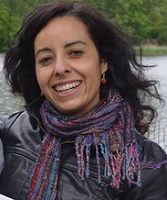 Verónica Donoso (PhD) is INHOPE Executive Director. INHOPE is the global umbrella organisation uniting national internet hotlines engaged in combating online child sexual exploitation and child sexual abuse material (CSAM).
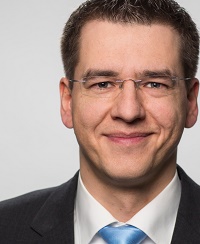 Martin Drechsler is Managing Director of FSM (Association for Voluntary Self-Regulation of Digital Media Service Providers). He studied law at Humboldt University Berlin and FernUniversität Hagen, and previously worked as a lawyer in Berlin. Since joining FSM in 2008, he has focused on legal and technical questions of child protection on the internet. He is responsible for the FSM age classification system (www.altersklassifizierung.de) and advises FSM members about age rating, labelling of web content and the use of parental controls. Martin also coordinates FSM’s international activities. He gives lectures on child protection and media law. Martin was appointed Deputy Managing Director of FSM in 2013 and has been Managing Director since September 2016.
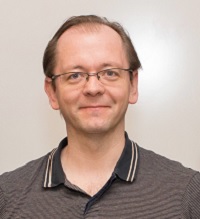 Chris Felton has been a civil servant for over 20 years and has a wide range of policy and operational experience from his time at the Foreign and Commonwealth Office, HM Treasury, Cabinet Office, Home Office and Charity Commission, and from time outside government working in government relations for Universities UK, the representative body for the heads of the UK’s universities. Chris is also a Senior Visiting Research Fellow in the Department of War Studies at King’s College London and a trustee of the Marie Collins Foundation, a charity working to tackle online child sexual exploitation. Chris has a BA(Hons) in Medieval Studies from the University of Manchester and an MBA from Warwick Business School. He is also an alumnus of the Singularity University in California and was a judge for the 2016 Government Innovation Challenge.
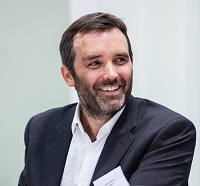
 Patrick Geary is a children's rights and business specialist at the UNICEF headquarters in Geneva, where he focuses on legal and public policy advocacy. He has been an international children’s rights advocate for over a decade, and has worked for and with a wide range of companies, government institutions and civil society organisations.
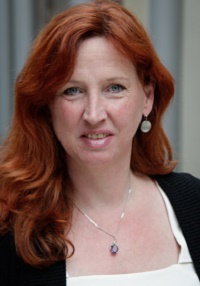 Arda Gerkens is managing director at the Expertisebureau Online Childabuse (the Dutch hotline) and Member of the Dutch Senate. She is also the chairwomen of the Commission Economical Affairs of the Senate. In May 2016, she became President of INHOPE, the member organisation for all hotlines in the world.
 Javier Hernández-Ros carried out studies in civil engineering and holds a Master’s Degree in Business Administration. He joined the European Commission in 1986 and was involved in technology transfer and innovation policies.
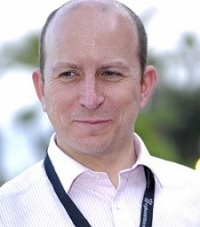 Karl Hopwood is an independent eSafety expert. He is a member of UKCCIS (UK Council for Child Internet Safety) and works extensively with schools to support children and young people in developing safer online behaviours as well as to promote digital literacy. In the past he has worked with the European Commission, the UN (ITU), CEOP, Becta and the South West Grid for Learning (SWGfL) as well as with several local authorities within the UK.
 Liselot Hudders is an assistant professor at the departments of Communication Sciences and Marketing at Ghent University, Belgium. She teaches courses on consumer behaviour, communication management and marketing communication. Her research interests include persuasive communication, consumer behaviour and advertising literacy. Her research focus is on how materialism and luxury consumption, green consumption practices, and food consumption may contribute to an individual's happiness (both for children and adults). In addition, she investigates how children and youngsters cope with (new) advertising techniques and how their advertising literacy can be improved. She has published, among others, in the International Journal of Advertising, the Journal of Advertising, Appetite, and the Journal of Happiness Studies.
 Bruno Jakic is an engineer, scientist, published author and entrepreneur in the field of Artificial Intelligence. His current work and interests include (‘Big’) data, (predictive) analytics and (serious) gaming. Additionally, he has a strong, long-standing interest in cryptography/secure communications and the intersection between technology and society.
 Vernon Jones BA (Hons) MA is the Head of Safety at MovieStarPlanet ApS, a Danish company that produces social interactive games and apps for children. As a registered social worker with the Health and Care Professions Council in the UK and the Danish Association of Social Workers, he has over 20 years’ experience in working with child protection and online child safeguarding issues. This includes working with online child safeguarding issues in NGO and statutory child safeguarding agencies in Denmark and the UK.
 Nelli Kongshaug is project manager for the Red Cross helpline for children and youth in Norway, and has been working there since 2007. She is interested in the voice of youth and in giving young people space for speech and to be listened to.
 Eric Krier studied sociology at the University of Augsburg, Germany and worked on European youth projects in parallel, so that before the end of the last millennium (the times of mIRC and ICQ), ICT quickly became a common part of his work and life. Since 2002, he has been working for the National Youth Service (snj.lu) in Luxembourg, where currently he is in charge of the department called ‘Youth work support’.
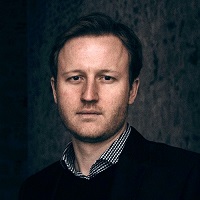 Ľuboš Kukliš studied at the Law Faculty of Comenius University in Bratislava. Since 2006, he has served as Chief Executive at the Council for Broadcasting and Retransmission of Slovakia. He is the Council’s representative in the European Regulators Group for Audiovisual Media Services (ERGA), where he also chairs ERGA’s Taskforce on the Protection of Minors. In the field of media and administrative law, he is also active in lecturing and writing - most recently the Electronic Media Regulation (Wolters Kluwer, 2015) and the Slovak Broadcasting Act – A Commentary (Wolters Kluwer, 2016).
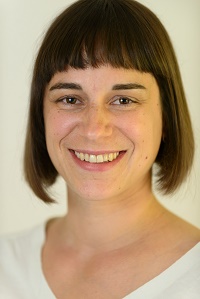 Eva Lievens is Assistant Professor of Law & Technology at the Law Faculty of Ghent University, Belgium and a member of the Human Rights Centre. From 2003 until 2015, she was a member of the KU Leuven Centre for IT and IP Law (CiTiP, previously the Interdisciplinary Centre for Law & ICT). A recurrent focus in her research relates to human and children's rights in the ICT and media sector and the use of alternative regulatory instruments, such as self- and co-regulation.
 Marco Marsella is Head of Unit ‘Learning, Multilingualism and Accessibility’ in the Directorate General for Communications Networks, Content and Technology (DG CONNECT) of the European Commission.
 Hans Martens (PhD) is Digital Citizenship Team and Programme Manager at European Schoolnet (EUN). Within this context, Hans coordinates the Insafe network of Safer Internet Centres (SICs), while leading the Better Internet for Kids (BIK) project which implements, on behalf of the European Commission, a comprehensive range of digital tools and services that help make the internet a trusted environment for children through actions that empower and protect them online, sharing knowledge, resources, and practices. Hans’s team is involved in a variety of other campaigns, partnerships, platforms and projects, including, the eSkills 2015-2016 campaign, the Digital Skills and Jobs Coalition, the European Coding Initiative, the eSafety Label, the Web We Want, and I-LINC.
 João Pedro Martins is a 19-year-old computer engineering student at the University of Coimbra in Portugal. He has been a Youth Ambassador for approximately five years.
 Neil Melhuish is the Director of Policy at NetSafe, Aotearoa - New Zealand. Before joining NetSafe he worked in the education sector where his interest in the potential of digital technology for learning was ignited. Around the same time, Neil’s experiences on the periphery of a serious ‘cybersafety’ incident sparked a parallel interest in the challenges accompanying the use of technology that has continued through to his current role.
 Christel Mercadé is a lawyer specialised in EU fundamental rights. Since 2014, she has worked for the European Commission in DG Justice as a legal/policy officer on EU policy combating racism, xenophobia and other forms of intolerance, enforcement of EU legislation and protection of EU fundamental rights. Before joining the Commission, she served as an external legal consultant for the Commission in Tipik Legal (2014), as a human rights lawyer before the Inter-American Commission on Human Rights in the Peruvian NGO APRODEH (2011-2012) and as labour lawyer at the Spanish law firm Cuatrecasas, Gonçalves, Pereira (2008-2011). Her educational background includes a degree in Economics (2006), a degree in Law (2009) at the University Pompeu Fabra (Spain) and University of Leicester (UK), and a Master of European Law (LL M) at the College of Europe, Bruges (2013). She is a member of the Barcelona Bar Association.
  Dr Rachel O’Connell is CEO of Trust Elevate. Trust Elevate's mission is to enable the better protection of children and young people's rights to safety, privacy and participation online. Rachel is one of the preeminent authorities on electronic identification and age verification, and author of a technical standard entitled PAS 1296 Age Checking Code of Practice*. Dr O'Connell advises a range of organisations, including online businesses that serve children and young people, children's rights advocacy groups and charities on the challenges and opportunities associated with new and emerging legislation, programmes of education, technology and policy innovations designed to enhance child safety online. Dr O'Connell is particularly focused on the role of age checking in enabling compliance with the provisions of both Article 8 of the General Data Protection Regulation (GDPR) and the Audiovisual Media Services Directive (AVMSD).
Kira O’Connor
 As Twitter’s EMEA Safety Outreach, Kira O’Connor works to define policy and ensure user safety and security in the challenging realm of modern social media. Kira and the global team work around the clock to keep Twitter users safe by fighting online abuse including targeted harassments, child sexual exploitation, human trafficking and cyberbullying.
Kira joined Twitter in early 2013 as a part of the Media Partnerships team where she worked with government bodies, non-profit organisations and high profile individuals - helping them use Twitter effectively. Kira’s past experiences include policy at Access.org and LiveStrong, legal clerk and research assistant and, in a previous life, she was an on-air personality on both radio and TV.
Kira earned a BA in Media Studies and Mass Communications from the University of California, Berkeley and a Doctor of Jurisprudence from the University of Oregon School of Law. She is @KiraOConnor.
 Since 2007, Maaike Pekelharing has been working for the Dutch Knowledge Institute for Online Child Sexual Abuse (previously Meldpunt Kinderporno). The organisation consists of several programmes of which the hotline against child sexual abuse and the helpline on online sexual abuse are two. The work for the hotline consists of analysing child sexual abuse material. The Dutch hotline receives tens of thousands of reports per year and this amount still grows. Maaike also coordinates the Helpwanted.nl helpline: a helpline for children, youngsters and their educators who have become a victim of online sexual abuse. The reports differ from girls who have been victims of sexting to boys who have been blackmailed after they have had webcam sex with someone they didn’t know. Together with her colleagues, Maaike advises the reporters what they can do.
 Professor Derek Perkins, BSc, MSc, PhD, AFBPsS is a Consultant Clinical and Forensic Psychologist, based at Broadmoor Hospital in the UK. He has worked in sex offender assessment and treatment in prison, community and forensic mental health settings and is regularly instructed in criminal proceedings involving sexual and homicide offences.
 Guðný Rós is 18 years old and lives in a small town in Iceland. She is currently in the last year of her secondary education. In 2013, she joined the SAFT youth panel, which stands for a community of family and technology. The youth panel are working towards creating a safer internet, and seek to educate kids about communication on the internet. For the last two years, the youth panel has taken part in the No Hate Speech Movement which is a project which aims to lessen the hate speech, racism and discrimination that we see people use online.
 Journalist, reporter and author, Kate Russell has been writing about technology and the internet since 1995. Appearing regularly on BBC technology programme Click, she is also a partnered Twitch streamer and speaks regularly at conferences and lectures in schools and universities, inspiring the next generation of technologists. Her website, KateRussell.co.uk, won the 2015 UK Blog Awards for best individual digital and technology blog and, in June 2016, she was voted the Computer Weekly 13th most influential woman in UK IT. Her debut novel was published in 2014 under official licence to space trading game, Elite: Dangerous, the childhood passion that inspired her love of technology. As part of the licensing deal she got to name a planet in the latest game release of Elite: Dangerous. She called it Slough.
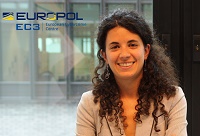 María Sánchez graduated in Law and International Relations in 2005 from the Comillas Pontifical University of Madrid, Spain. After short-term periods working at the Embassy of Spain to the Netherlands and at the International Criminal Tribunal for the Former Yugoslavia (ICTY), María joined Europol in October 2006, where she has been active in different functions and departments. She is currently part of the Outreach and Support team of the European Cybercrime Centre (EC3), where she has worked since November 2012. As the prevention and communication officer, María is responsible for the preparation of educational material related to cybercrime, as well as the coordination and development of joint law enforcement prevention and awareness campaigns and initiatives in the areas of high-tech crimes, payment fraud and child sexual exploitation, both within the EU and beyond. In this domain, María is the EC3 contact point for Europol’s cooperation with partners, from both the public and private sectors.
 Martin Schmalzried holds a Master’s Degree from the ULB (Brussels) in Political Science and is a licensed sociology teacher in upper secondary education. He has been working at COFACE (Confederation of Family Organisations in the EU) as a Policy Officer for over five years.
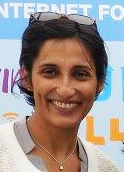 Rehana Schwinninger-Ladak was appointed deputy Head of the Unit ‘Learning, Multi-linguism and Accessibility’ in October 2016. The Unit’s mission is to make the Digital Single Market more accessible, secure and inclusive. To this end, the Unit supports policy, research, innovation and deployment of learning technologies and key enabling digital language technologies and services allowing all European consumers and businesses to fully benefit from the Digital Single Market. The Unit is responsible for the Web Accessibility Directive, which makes public sector websites accessible by people with impairments. The Unit also promotes a better internet for children by protecting and empowering children online, and improving the quality of content available to them.
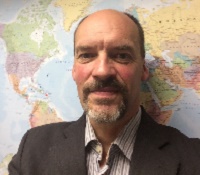 Michael Sheath qualified as a Probation Officer in the UK in 1988, and worked with sexual offenders in group and individual settings in prison and the community for a decade thereafter.
 Krisztina Stump is Deputy Head of Unit of the Audiovisual & Media Policy Unit, in Directorate General for Communications Networks, Content and Technology (DG CONNECT) of the European Commission.
 Ewa Thorslund is Director at the Swedish Media Council. She was formerly a public affairs expert for the Swedish IT and Telecom industries and Head of Department at the National Swedish Board for Industrial and Technical Development.
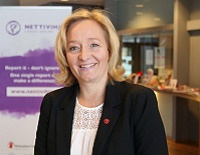 Nina Vaaranen-Valkonen, M.Soc.Sc., is a social psychologist, cognitive therapy (CT) psychotherapy student (2013 - June 2017) and a health care professional. She works as an advisor at Save the Children Finland, Children and Digital Media Unit. Her area of expertise is online child protection, transnational crimes especially relating to sexual exploitation and abuse of children through digital media.
 Marc van der Ham joined Google's EU policy team in December 2013. He recently moved to the EMEA Policy Strategy team in London to lead on consumer issues, ads standards and child safety.


